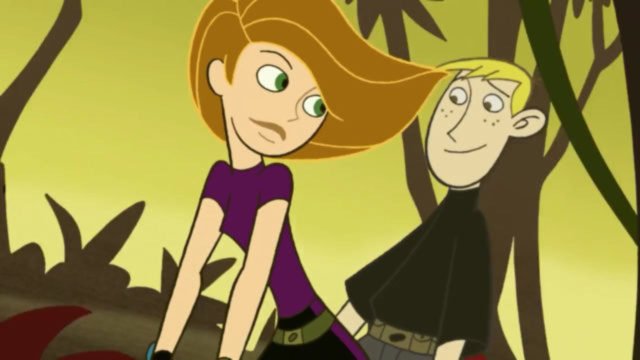
The chemistry between Kim Possible and Ron Stoppable was always undeniable, a slow-burn narrative that captivated audiences for years. While their journey from best friends to soulmates culminated in a pivotal, fan-celebrated moment, their romance wasn't a solitary evolution. Instead, it was meticulously shaped and pushed forward by the diverse, often unexpected, influences of their supporting cast. Understanding this web of connections reveals the true genius behind Kim and Ron's enduring appeal.
At a Glance: How the Supporting Cast Orchestrated a Romance
- Unsuitable Dates: Kim's failed romantic pursuits highlighted Ron's inherent comfort and compatibility.
- Rival Admirers: External love interests for both Kim and Ron sparked jealousy and forced emotional confrontations.
- Rufus: Ron's loyal naked mole rat subtly reinforced Ron's unwavering support and unique value.
- Drakken & Shego: Their dysfunctional dynamic provided a stark contrast, emphasizing the importance of mutual respect in Kim and Ron's bond and inadvertently pushing them closer during crises.
- Eric (The Synthon-drone): This manufactured rival served as the ultimate catalyst, forcing both protagonists to finally confront their true feelings and take a leap of faith.
- The Writers' Intent: Deliberate delays and strategic narrative choices allowed their individual characters and friendship to fully mature before romance blossomed.
The Long Game: Nurturing a Bond Beyond Friendship
For three seasons, the world watched as Kim Possible and Ron Stoppable navigated high-stakes missions and even higher-stakes high school drama, all while maintaining a seemingly platonic friendship. The creators intentionally held back the romantic payoff, a masterstroke that allowed for rich character development in animated series and deepened the audience's investment in their bond. This wasn't just about saving the world; it was about two distinct individuals growing into themselves, always with each other by their side.
Their connection was the bedrock, subtly reinforced by early episodes that hinted at something more. Consider "Crush" (Season 1), where Ron's extreme, almost irrational, reaction to Kim developing a crush on another student wasn't just typical best-friend antics; it was a clear signal of deeper, unacknowledged feelings bubbling beneath the surface. These moments weren't isolated incidents; they were breadcrumbs leading viewers down a carefully constructed path, ensuring that when the romance eventually blossomed, it felt earned and entirely natural.
The Unseen Mirror: How Others Reflected Their True Feelings
Sometimes, to truly see what you have, you need to see what you don't have. Kim and Ron's journey was paved with external relationships that, rather than pull them apart, often served to highlight their unique and irreplaceable connection.
The Unsuitable Dates: Kim's Realization
Kim Possible, the global teen hero, effortlessly commanded attention. Yet, her dating life was consistently, often comically, disastrous. She dated a parade of attractive, popular boys, each seemingly a "better" match on paper than the quirky, bumbling Ron. However, these relationships inevitably fizzled out. Why? Because none of them offered the effortless comfort, genuine understanding, and unwavering acceptance that Ron Stoppable did.
Every failed date underscored a crucial point: while these boys might have impressed on the surface, they couldn't truly see Kim the way Ron did. They couldn't keep up with her secret life, understand her deepest fears, or simply make her laugh without trying too hard. These incompatible dates served as a powerful, indirect influence, gradually making Kim realize that the qualities she sought in a romantic partner were already abundantly present in her best friend. The more she tried to find "the one" elsewhere, the more evident it became that he had been by her side all along.
Ron's Entanglements: Jealousy and Self-Discovery
It wasn't just Kim's romantic dalliances that moved the needle; Ron's own brief ventures into other relationships provided crucial catalysts. These interactions didn't necessarily mean Ron was moving on; instead, they often provoked a reaction from Kim that hinted at her own evolving feelings.
Take Yori, from the episode "Gorilla Fist." Yori, a highly capable ninja, clearly admired Ron and even showed romantic interest. Kim's uncharacteristic jealousy was palpable. It wasn't just about protecting her friend; it was a visceral, emotional response to the threat of losing Ron's attention and affection to someone else. Similarly, in "Steal Wheels," Kim's discomfort with Ron spending more time with Felix, another friend, showcased a subtle but significant possessiveness. She wasn't just losing a sidekick; she was losing her "monopoly" on Ron's social and emotional life, a monopoly she hadn't realized she cherished until it was threatened. These moments, born from Ron's connections with others, forced Kim to confront the growing intensity of her feelings, moving them beyond mere friendship into something more profound and possessive.
The Confidantes and Catalysts: Subtle Forces at Play
Beyond the romantic rivals, other characters played roles as subtle confidantes, silent encouragers, or even unwitting emotional amplifiers.
Rufus: The Silent Wingman
Ron's loyal, naked mole rat, Rufus, might seem like a comedic sidekick, but his presence subtly underscored Ron's unique value. Rufus was fiercely loyal, always ready to help Ron, and often highlighted Ron's unexpected resourcefulness and kindness. When others doubted Ron, Rufus never did. This unwavering belief from his tiny companion mirrored Ron's own steadfast loyalty to Kim, reinforcing to viewers (and perhaps subconsciously to Kim) that Ron was truly one of a kind. Rufus was a constant, tangible reminder of the good, steadfast, and surprisingly capable friend Kim had in Ron.
The Stoppable Family: A Grounding Influence
While less directly involved in the romantic push, Ron's parents provided a stable and accepting backdrop that allowed Ron to be himself. Their unconditional love and acceptance of Ron, eccentricities and all, created an environment where Ron felt secure. This security allowed him to be the unwavering, authentic friend that Kim so desperately needed and eventually came to love. Their easy acceptance of Kim into their home also normalized her presence in Ron's life, further solidifying her role as more than just a friend in his world.
The Antagonistic Push: Villains as Unexpected Matchmakers
It might seem counterintuitive, but the very villains Kim and Ron battled week after week played a significant role in cementing their romantic destiny. Their constant threats forced the duo to rely on each other, often under extreme pressure, deepening their bond in ways that everyday life simply couldn't.
Drakken and Shego: A Love Story in Reverse
The dysfunctional partnership of Dr. Drakken and Shego served as a fascinating, often hilarious, counterpoint to Kim and Ron's burgeoning relationship. Drakken's bumbling incompetence and Shego's sardonic wit created a volatile, mutually disrespectful dynamic. Their constant bickering and lack of genuine teamwork, despite their shared goals, highlighted by stark contrast the importance of mutual respect, understanding, and unwavering support that defined Kim and Ron's crime-fighting (and later, romantic) partnership. By showing what a truly unhealthy "duo" looked like, Drakken and Shego inadvertently underscored the strength and validity of Kim and Ron's bond. Their dynamic is a perfect example of how iconic villain duos can, ironically, define hero relationships.
Even more directly, the episode "Emotion Sickness" (Season 3) provided a crucial, albeit accidental, push. When Drakken's Moodulator device amplified existing emotions, it wasn't just a plot device; it was a revelation. Kim's genuine concern for Ron, and Ron's expressed fear of ruining their friendship if they pursued romance, were amplified. Crucially, it was Kim's true love for Ron that ultimately broke the device's control, explicitly demonstrating the depth of her feelings to the audience and, perhaps, to herself.
The Eric Enigma: A Catalyst for Confession
No supporting character had a more direct and immediate impact on the final romantic confession than Eric, the new boy introduced in Kim Possible Movie: So the Drama. Eric was attractive, charming, and seemed to offer Kim the kind of "normal" high school relationship she often struggled to find. His arrival was the ultimate external pressure, a perfect storm designed to force both Kim and Ron to confront their feelings.
For Kim, Eric's presence, coupled with the threat of Ron potentially moving away for his dad's job, created a sense of urgency and fear of loss. She was suddenly faced with the possibility of a future where Ron wasn't her constant, unwavering presence, and it made her realize just how much she cherished him. For Ron, who had secretly loved Kim since they met but feared expressing it would ruin their friendship, Eric represented the removal of his "sure thing." He could no longer afford to sit back; if he wanted to be with Kim, he had to take a risk. The reveal that Eric was merely a Synthon-drone, a manufactured illusion, was a brilliant narrative stroke. It wasn't about Kim choosing between two real boys; it was about her realizing that the "perfect" new boy couldn't hold a candle to the genuine connection she shared with Ron. Eric's sole purpose was to act as a catalyst, an undeniable push that compelled both protagonists to finally acknowledge their profound feelings for each other.
The "So The Drama" Turning Point: A Collective Culmination
The movie Kim Possible Movie: So the Drama wasn't just a finale; it was the ultimate proving ground for every influence that had shaped Kim and Ron. The threat of Ron moving away, the manufactured competition from Eric, and a high-stakes battle against Dr. Drakken and Warmonga – all converged to create an environment where evasion was no longer an option.
During the climactic battle, Kim realized Ron's indispensable value. His unwavering support, his unique problem-solving (even if unconventional), and his constant presence in her life crystallized into a profound understanding. It wasn't just about fighting villains; it was about fighting for their future, together. This moment of epiphany, driven by the immediate danger and the presence of their collective foes, cleared away all doubt.
The subsequent confession was the culmination of everything: Kim, acknowledging that Ron had "always been the one," and Ron, reciprocating his long-held love. Their heartfelt kiss solidified a romantic relationship that had been years in the making, directly influenced by the intricate web of supporting characters and narrative choices that had pushed, pulled, and propelled them toward each other. This moment resonated deeply with fans, a testament to the power of the friends-to-lovers trope when executed with such care and nuance.
Beyond the Kiss: A Stronger Partnership
The romantic development between Kim and Ron didn't just provide a satisfying conclusion to the original series; it elevated their partnership. Rather than altering their effectiveness as a crime-fighting team, their romantic relationship enhanced their communication and understanding. The foundation of their deep friendship meant that their new dynamic was built on mutual respect and an intimate knowledge of each other's strengths and weaknesses. They became an even more formidable force, demonstrating that true love can indeed make you stronger, both personally and professionally.
This genuine progression from friends to lovers, grounded in shared experiences and mutual respect, struck a powerful chord with viewers. It wasn't a sudden, unearned romance, but one that felt organic, inevitable, and deeply satisfying precisely because of the careful setup and the constant, often subtle, influence of their supporting cast.
Key Takeaways for Storytellers & Viewers
The journey of Kim and Ron offers invaluable lessons, not just for fans, but for anyone interested in narrative craft:
- The Power of Indirect Influence: Sometimes, the most potent narrative forces are not direct commands but subtle nudges from the periphery. Supporting characters don't always need grand declarations to influence the main plot; their mere presence, or absence, can be enough.
- Why Delaying Romance Can Build Stronger Foundations: The Kim and Ron saga is a masterclass in the slow burn. By prioritizing character growth and friendship first, the eventual romance feels richer, more earned, and more meaningful. It allows the audience to truly invest in the individual characters before they become a couple.
- The Importance of Diverse Supporting Roles: Every character, from the main antagonists like Drakken and Shego to the temporary love interests like Eric and Yori, served a distinct purpose in developing Kim and Ron's relationship. Diverse supporting roles create a more dynamic and believable world, allowing for a wider range of narrative triggers.
- Friction Forges Stronger Bonds: The challenges, jealousies, and external pressures created by the supporting cast were not obstacles to Kim and Ron's love; they were the very forces that refined it, forcing them to confront their feelings and appreciate each other anew.
Ultimately, the enduring appeal of Kim and Ron's romance lies not just in their own undeniable chemistry, but in the meticulously crafted ecosystem of characters that surrounded them. From the well-meaning friends to the dastardly villains, each member of the supporting cast played an understated yet critical role in shaping their destiny, proving that even the most heroic relationships are truly a team effort.
Untuk pemahaman lebih lengkap, baca panduan utama kami: Kim Possible and Ron Stoppable